


Most store owners don’t talk to customers. That’s a mistake.
Startup founders are told this all the time: talk to your users. In ecommerce, this is totally underappreciated.
Most store owners look at analytics, ads, conversion rates, product pages, and competitors. All useful. But especially in the early days, it is absolutely crucial for small online store owners to talk with their customers.
The main reasons to do that are:
- Learn about them, what they like, what they don’t like, why they bought, and why they almost didn’t.
- Show them that you care. Your bigger competitors don’t care. No real person from Amazon or Zalando reaches out and genuinely asks.
For example:
Reach out yourself via manual email or WhatsApp to each customer and ask if they are happy with the experience. Even when they didn’t like something, if it’s really an email from the founder, they are surprised that you care and that a real person is reaching out. In our own small online shoe store, some of our most loyal and highest-LTV customers came from the personal messages or calls we made to them in the early days.
We didn’t overthink the calls. We just made them, said where we were calling from, and explained that we were just trying to understand if they were happy with the shoes. Even when people were defensive at first, telling them that we were not trying to sell anything helped a lot. And if they were happy, we also asked for a review and maybe even UGC.
And if something went wrong with the order, for example, there was a delay, we sometimes called to let them know as well. Not because calling is magically scalable, but because in the early days, it shows that a real person actually cares.
In the early days, you should know the name of each customer.
Reach out again in 3 or 6 months and ask if they are happy with the product.
Call your customers. Call your customers. This is not for every business or every customer, and it is hard to do. But in the early days of our shoe store, I called some customers and asked if they were happy with their order. Yes, calling. And yes, in Estonia. It worked surprisingly well, because I didn’t try to sell anything. I genuinely asked. Small warning: don’t be creepy. Don’t call people and start pitching like an insurance salesman from 2007. The point is to learn and show that you care and learn, not to pressure anyone.
Use exit surveys. Ask visitors who have been on your site but are leaving why they are leaving. This might not work, but it is worth testing.
Have live chat on your site. You can even test proactively starting a conversation there, but not in the first second of the first visit.
Join forums and online groups where your potential customers are. Participate in the conversations, but also read. If you sell kids’ stuff, be in parenting or, for example, Montessori Facebook groups or Reddits. If you sell hiking boots, be in hiking groups. Yes, in a perfect world, you get some customers from there, but don’t spam. You also learn about your ideal customers, including how they think, what they care about, what words they use, and how they make decisions. Then bring that understanding to your store & marketing.
Talk in real life. Whenever I see someone wearing shoes we sell in our shoe store or offer in Hertwill, whether on the street or in a bar, I have a chat with them, ask for feedback, or sometimes just say they are great shoes.
I still remember one time at Tops, one of my favorite bars in Tallinn, when I accidentally overheard one of the employees talking about shoes we sell in our own shoe store. I joined the conversation, asked what exactly they were discussing, and explained who I was. He also mentioned a punk band that wears the same boots at shows, so we reached out to them afterward.
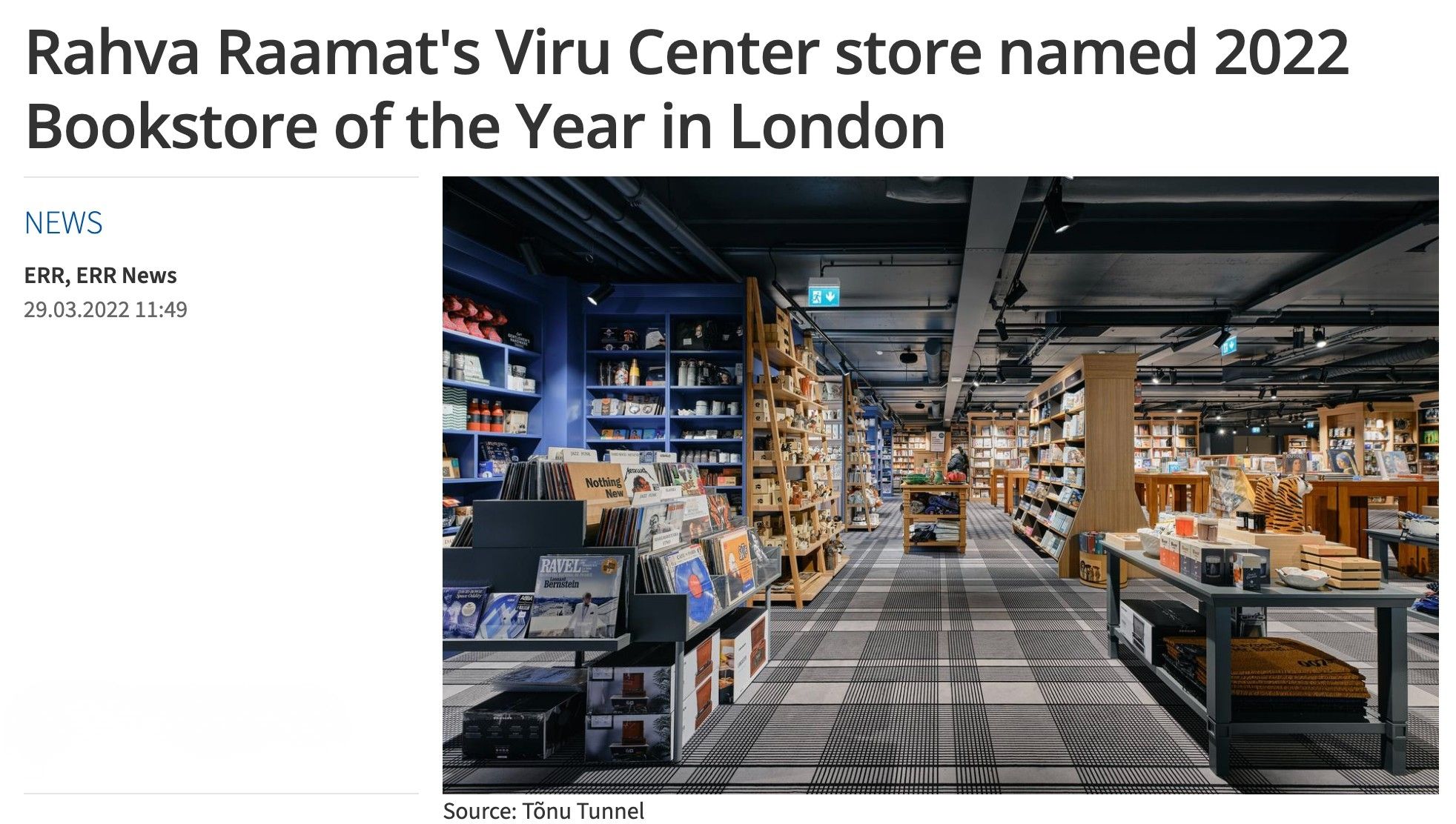
When I worked at a local bookstore chain as head of ecommerce, I often worked from the flagship store, Viru Rahva Raamat in Tallinn, instead of the office. (Fun fact: it was later chosen as the best bookstore in the world at the London Book Fair.) Yes, it was a super nice place, had a cafe, and, of course, a huge selection of books. But the real reason was to be closer to customers and have a chat with them. It was super useful, even though I was responsible for ecommerce.
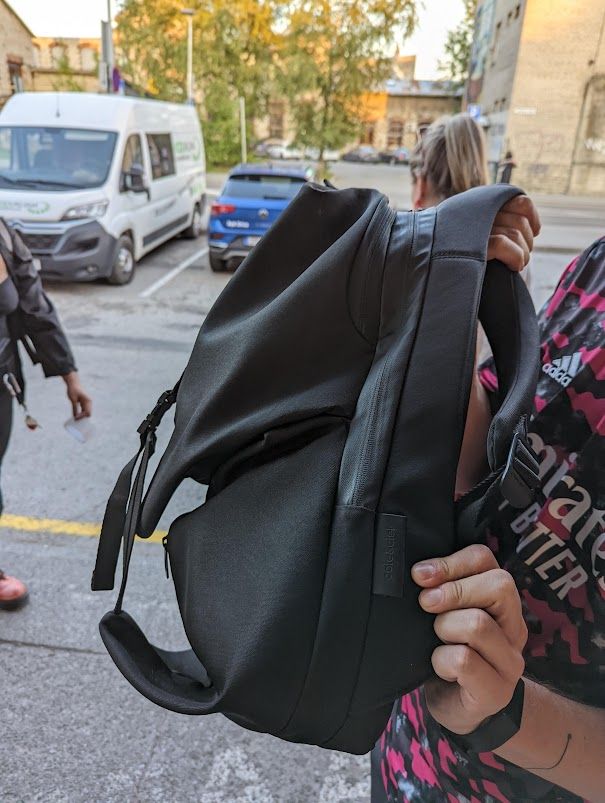
As Hertwill’s founder, whenever I see someone wearing a cool product from the brand I don't know, I ask about the brand and product. This also gives me a good opening to write to the brand later and say I saw someone on the street wearing this product and it was so cool I had to reach out.
For example, this image was taken by me on a Tallinn street when I saw a tourist wearing a cool bag. We had a chat about the bag and also talked about Hertwill.
If you see someone wearing something or using something similar to the products you are selling, have a chat. Try to understand why they chose that product, why that store or online store, and if it comes up, mention that you are asking because you are building your own business and would appreciate honest feedback.
This is true whether you are building an online store that sells products from other brands or building your own brand.
But I would say it is even more crucial if you are the brand or manufacturer.
You need to know why people choose your product, why they don’t, what they compare it with, what they misunderstand, what they love, and what they expected before buying. Otherwise, you are making product, pricing, packaging, website, and marketing decisions based mostly on guesses or numbers without context.
For smaller brands, fairs can be one of the best places to learn this. You get to have real conversations with customers, hear what they ask, see what they pick up, and notice what they ignore.
What to ask customers
You don’t need to make this complicated. Just ask simple questions.
For example:
“How did you find us?”
“Why did you decide to buy from us?”
“What were you actually looking for when you bought this?”
“Was there anything that almost stopped you from buying?”
“Was anything confusing on the site?”
“What other stores did you compare us with?”
“What made you trust us enough to order?”
“Was delivery clear enough before you ordered?”
“Would you recommend us to a friend? If not, what should we fix?”
But keep in mind: keep it casual. This is not a survey or a job interview. Don’t attack people with 12 questions like a badly trained market researcher. Ask one question at the time. And have a normal conversation.
These answers are useful because they help you understand your customers on a granular level and understand what actually matters. Founders are very good at making confident guesses. Customers are very good at proving them wrong.
What to do with the answers
Don’t just collect feedback and feel productive.
If 5 people ask or tell about delivery time, make delivery time clearer on the product page.
If people don’t understand sizing, add a better size guide.
If people say they bought because the product is made in Europe, put that higher on the page or add Made in EU label to each image.
If they mention that they almost didn’t buy because returns were unclear, fix your returns page.
If people keep asking whether the product is suitable for a specific age, skin type, room size, weather, dog breed, or whatever else, add that information.
Customer conversations should turn into better copy, better product pages, better emails, better ads and fewer stupid assumptions.
This is your unfair advantage
My point is simple: knowing your customers extremely well can be one of the unfair advantages of building a profitable ecommerce business.
Most of your competitors don’t do that. They have more data, more dashboards, and automated AI-powered flows asking for feedback.
Still, most of them don’t really talk to customers.
You should.
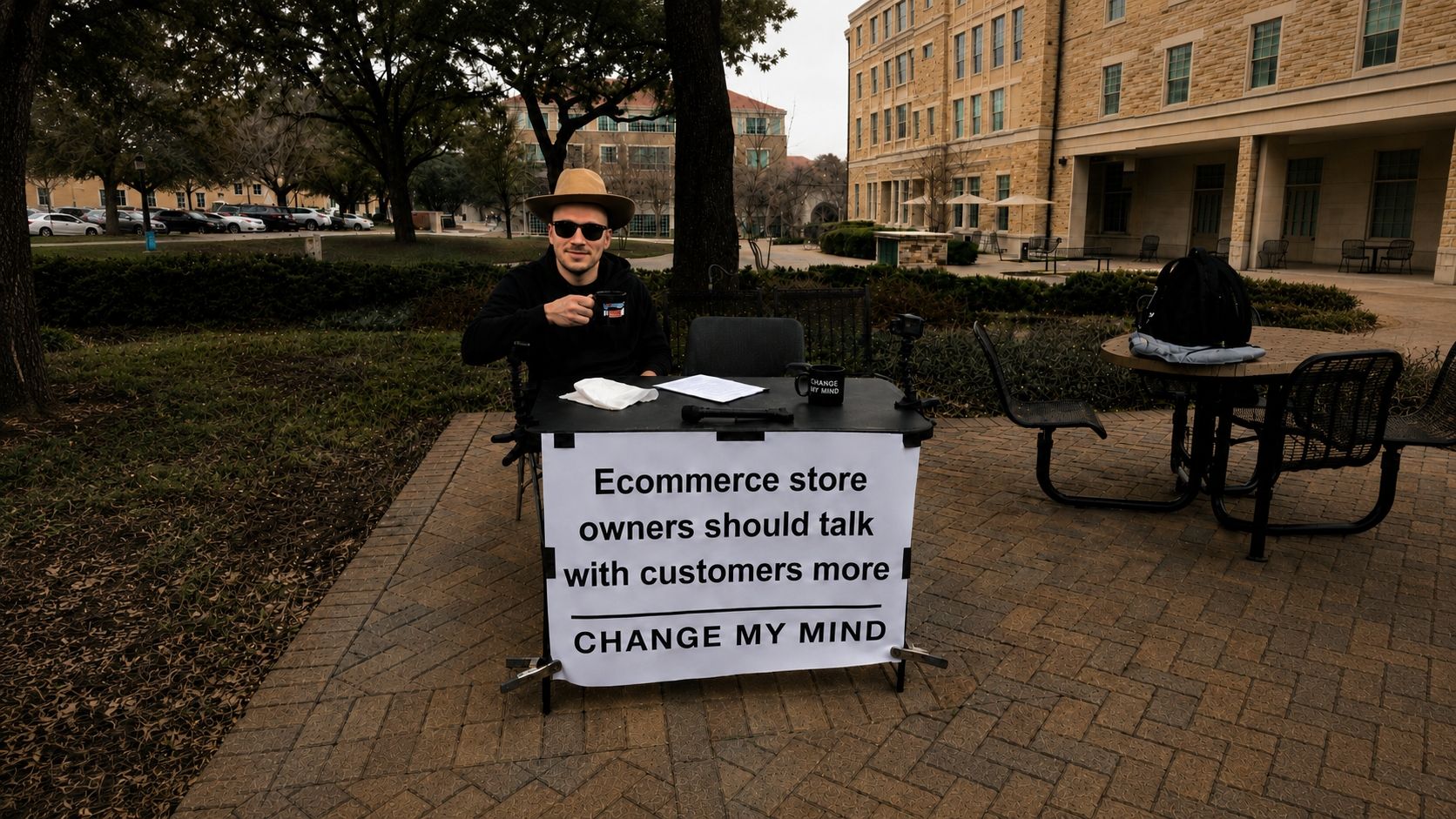
Written by Joosep Sibul, founder of Hertwill.