


The advice we keep giving to new dropshipping stores
At Hertwill, we’ve sent hundreds of emails with tips and feedback to new online stores using our platform.
Recently, we looked through the advice we give most often. Not theory. Not generic ecommerce advice. Actual feedback sent to real store owners.
This post does not cover everything a new store should improve. It covers the most common mistakes we keep seeing when talking with first-time online store founders.
1. Make the store look trustworthy
This is the biggest one.
Before a customer buys from your store, they need to feel that it is real. Before premium brands approve your store, they also need to feel that it is real.
Start with the basics.
Add an About us page. Not a generic AI text about passion, quality, and customer satisfaction. That says almost nothing. Write who is behind the store, why you started it, what kind of products you sell, and who they are for.
Adding a real photo or two helps. People trust people more than anonymous websites.
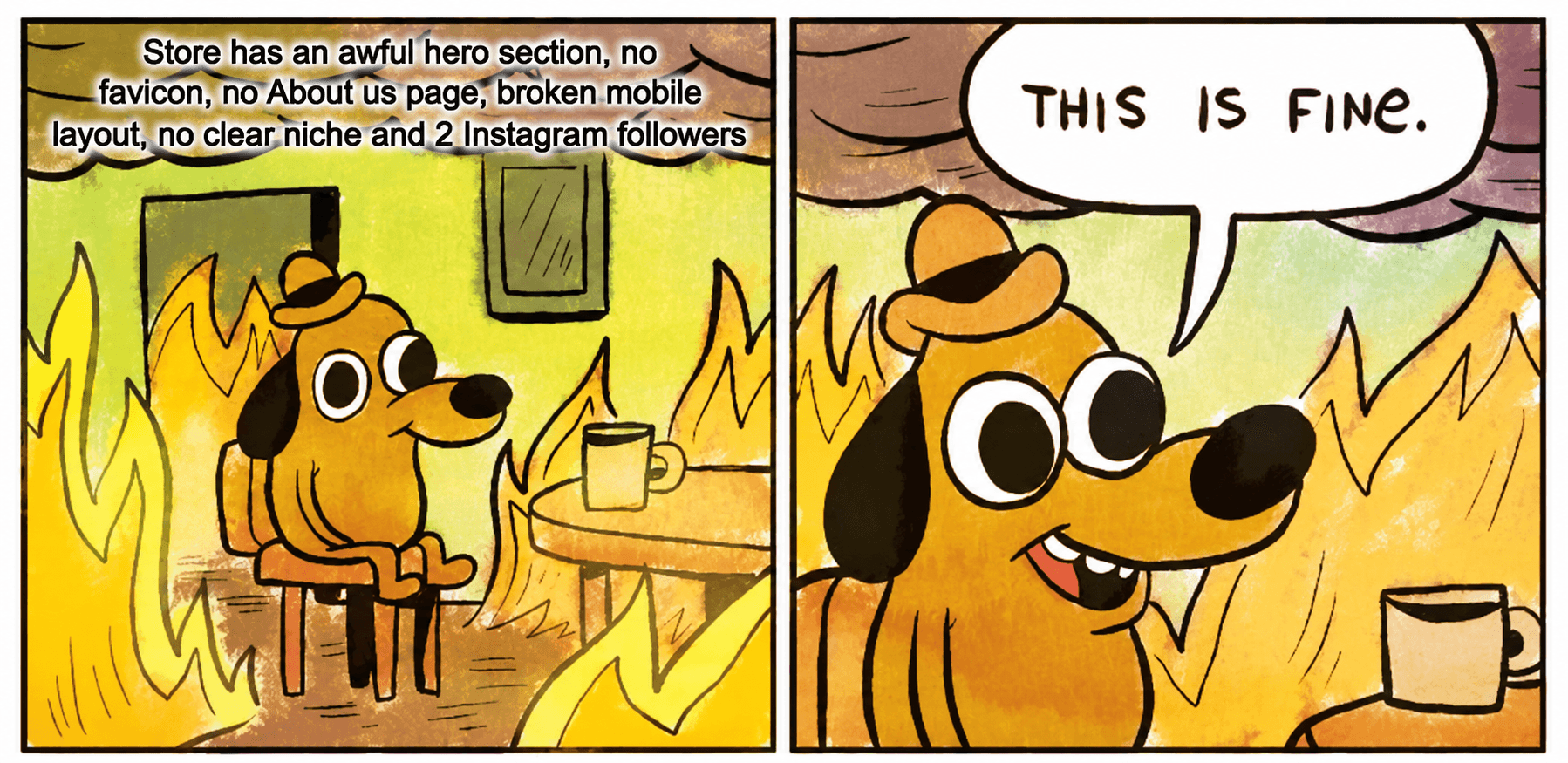
Also add a favicon. It is a small detail, but missing it makes the store feel unfinished.
Your store name should also be clearly visible. A symbol-only logo works for Nike. It usually does not work for a brand-new online store nobody has heard of yet.
2. Use a clean design
A lot of new stores make the design more complicated than it needs to be.
In most cases, a white or light background works best. It makes the store look cleaner, more familiar, and easier to browse.
Dark, brown, green, or very colorful backgrounds can work, but they are harder to pull off. Most new stores should not start there.
The logo also needs to be readable. Many new stores use logos with tiny text, thin fonts, or too many details. On mobile, they become useless.
Simple is usually better.
Your store should feel like a focused boutique, not a random product dump.
3. Have a clear niche
Trying to sell everything usually makes a new store weaker.
If your store has baby toys, pet products, candles, jewelry, bags, and kitchen items all together, it is hard to understand what the store is about.
A clear niche is easier to trust and easier to market.
For example, a store focused on montessori items, children’s furniture, premium pet accessories, or Scandinavian home products is much easier to understand than a general store selling “quality products for everyone.”
“Everyone” is not a target audience. It is usually a sign that the store has no real focus yet.
4. Fix the main menu
The main menu should help people find products quickly.
It should include your main collections or high-level categories. These should be based on the products you actually want to sell and market first.
Do not fill the main menu with links like Privacy Policy, Login, My Account, or other pages that belong in the footer.
For most small stores, the menu should be simple:
- Home
- Shop
- Main collections
- Sale (if you are having one)
- About us
- And maybe Contact
Also, do not hide the desktop menu behind a burger menu unless there is a good reason. On desktop, a normal menu usually works better.
And make the header smaller if it takes up too much space. This happens a lot. The header should not eat half the screen.
5. Remove unnecessary features
New stores often add too much.
A search bar is not always needed. If you have a small catalog, good categories are usually better than a weak search experience.
Mandatory account creation is also a bad idea for small stores. Let people buy without friction. They are buying a product, not applying for a mortgage.
Live chat should also be placed where people expect it, usually in the bottom-right corner. Standard UX exists for a reason. No need to get creative with basic things.
6. Add proper policy pages
This is boring, but important.
Customers want to know:
- How long shipping takes
- Is there a free shipping
- How returns work
- How to contact you
- What happens if something goes wrong
So you should have separate pages for shipping, returns, FAQ, contact, privacy policy, and terms.
These pages should be easy to find, usually in the footer.
Free shipping and free returns can also help in the beginning, especially when the store is new and has no reputation yet. You can always add a free shipping threshold later.
7. Test the store on mobile
Most visitors will browse on mobile.
So the store needs to be checked on mobile properly, not just quickly opened once.
Look at the homepage, product pages, menu, logo, buttons, images, and checkout flow.
A store can look fine on desktop and broken on mobile. That is a serious problem because mobile is where many customers actually see it.
Hero images are a common issue. They often get cropped badly on mobile, and suddenly the main page looks broken.
8. Do not compete only on price
Trying to be the cheapest is usually a bad strategy.
There will always be someone cheaper, with more money than you, who can afford to sell at lower margins. Especially in ecommerce.
If you sell good products, your store needs to make the quality believable. That means better design, better product selection, better copy, stronger trust signals, and a clearer story.
It also means being personal. As a new store founder, you can do things bigger stores often do badly: reply quickly, talk to customers, reach out by email, ask for feedback, and show that there are real people behind the store.
Use sale pricing properly. If a product is discounted, show a proper compare-at price and sale price.
Also add a Sale section to the main menu. If discounts only exist as coupon codes, many customers will miss them.
Charm pricing still works too. €109.99 usually looks better than €110.
9. Start with one market
A common mistake is trying to sell everywhere at once.
Pick one country first. Ideally, choose the country you know best. Also, think about your ideal customer profile.
It is much easier to create content, choose products, write ads, and build trust when you know exactly who you are selling to.
Trying to target everyone usually means you are not really targeting anyone.
10. Focus on one or two marketing channels
Do not try to do every marketing channel at once.
Pick one or two channels and make them work.
For many new stores, this means starting with social media and creating content consistently. Build some proof that the store is alive.
After that, start running Google Ads or Facebook Ads.
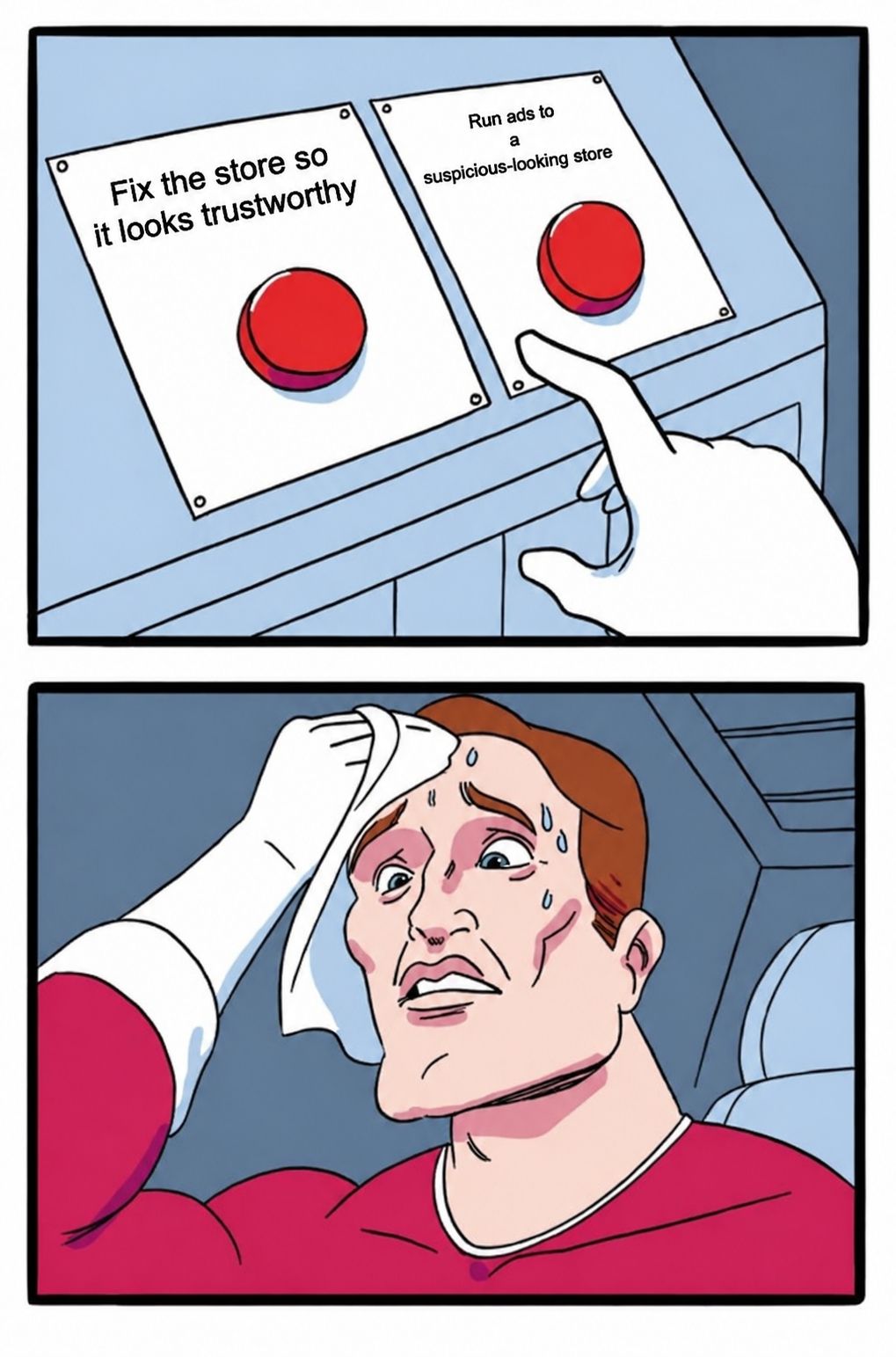
Starting ads before the store looks trustworthy usually just burns money faster.
Also, set up email marketing on your website right away. Giveaways or discounts can work for newsletter sign-ups, but only if the offer fits your audience. A discount should usually be at least 10% to feel worth noticing.
11. Build one store at a time
Another common mistake we see with first-time ecommerce founders is trying to build two online stores at the same time.
This almost always makes everything harder.
One store already needs product selection, design, copy, pricing, policies, customer support, content, marketing, testing, and a lot of small fixes. Building two stores at once usually just means both get less attention.
It is much better to make one store work first. Get real visitors. Get feedback. Learn what sells. Fix the weak parts.
Once one store has traction and you understand what works, building another store becomes much easier.
Trying to launch two stores at the same time usually spreads you too thin. One focused store is hard enough. Two unfinished stores are not better than one serious one.
12. Launch fast, then improve
Do not spend months polishing a store before anyone has visited it.
The store should be good enough, trustworthy, and functional. Then launch.
Real visitors will teach you more than another week of changing fonts and moving buttons around.
Waiting too long usually does not lead to a better store. It usually just delays the point where you find out what actually works.
Final thought
Most new stores do not fail because of one big thing.
They fail because too many small things feel unfinished.
No favicon. No real About us page. Weak logo. Confusing menu. Generic text. Missing policy pages. Bad mobile layout. Too broad product selection.
None of these are exciting problems. But fixing them makes the store look more serious, more trustworthy, and much easier to market.
That is usually the first step. Not more products. Not more apps. Not another growth hack.
Just make the store look like a place where a normal person would actually buy something.